


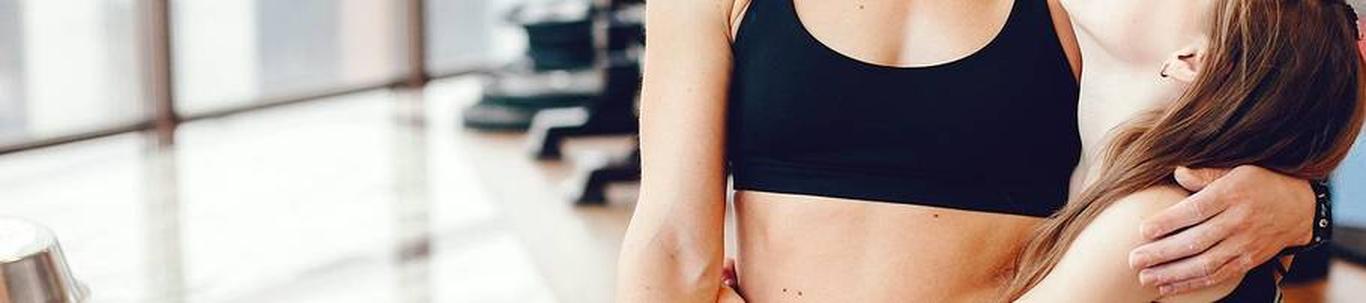
Body techniques: low-impact Pilates and rehabilitation movements for better movement

For whom is suitable and which is the purpose
Body techniques connect Pilates and specially adapted motion techniques to provide low-impact training solutions for recovery and daily function improvement. Suitable for those recovering from injury or surgery, want to relieve chronic pain, improve body attitude, or increase joint stability without excessive loads - including office staff, athletes in rehabilitation phase, elderly people and people with physical load limits.
What is offered
Training focuses on controlled, safe exercises that strengthen deep muscles, improve mobility patterns and restore functional capability. Programmes are individually customizable and support and improve clinical treatment by providing practical skills that can be used in daily movements.
Main functions
- <Adapted exercises - personal or small group hours that take into account the state and limitations of recovery.
- Low-effect training - muscle reinforcement and improvement of mobility without excessive compression or impact on the muscles.
- Training techniques - emphasis on correct body care, respiration and controlled movement, to prevent repeated injuries. >Pilates method - focus on flexibility and body consciousness. </live recovery < Focused and progressive approach reduces the risk of recurrence and allows for sustained results without sudden loads.
Essentials and value
Speed and safer recovery: customised exercises support clinical treatment and accelerate recovery while reducing pain-related limitations.
To ensure a better daily function: learned mobility techniques are transferred to daily activities, making lifting, sitting and physical load safer and more effective.
Preserving results: consistent posture, respiratory and sync hairdressing creates a stronger basis for further training and improvement of quality of life
What to first hour
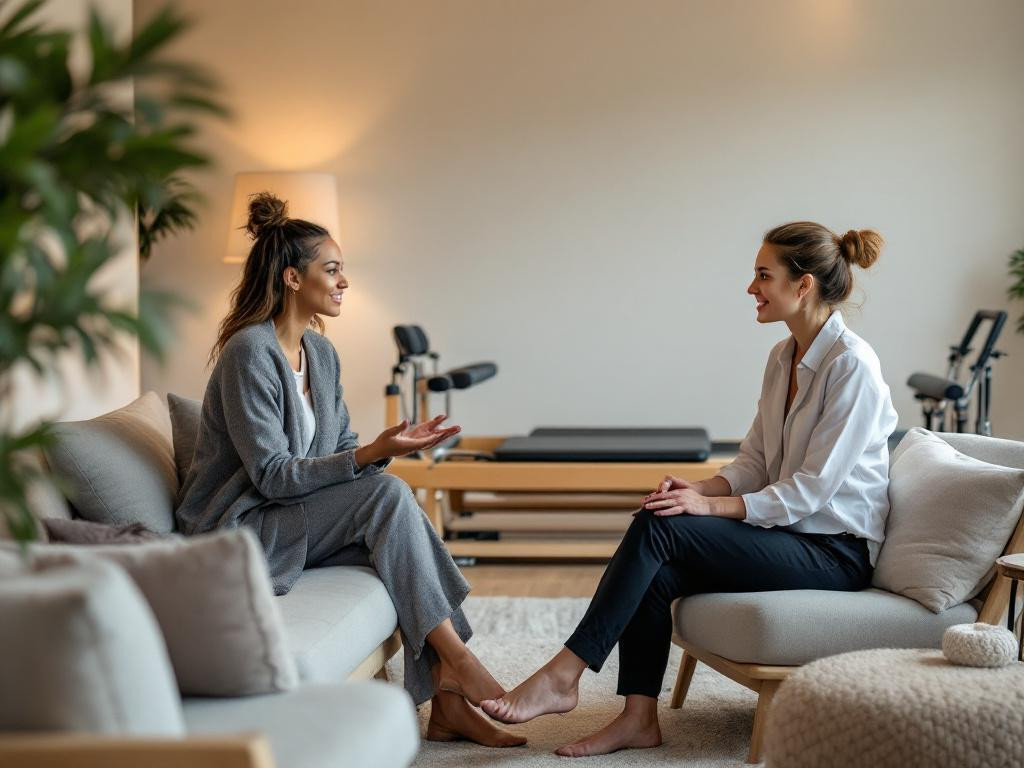
– Simple assessment and movement analysis – where the limitations Attention to motion techniques and rehabilitation distinguishes this approach from normal group training - focusing on quality, safety and individual progress ensures results that are felt in daily movements. Start-up is simple - initial assessment reveals priorities and together defines realistic goals. Regular practice and professional guides help to achieve clear and lasting progress.
Deciding in favour of such an approach is investing not only in a momentary recovery but also in the future - in the development of stronger, more flexible and more confident movement.
Start-up is simple - initial assessment reveals priorities and together defines realistic goals. Regular practice and professional guides help to achieve clear and lasting progress.
Deciding in favour of such an approach is investing not only in a momentary recovery but also in the future - in the development of stronger, more flexible and more confident movement.

Comments (0)