



Incidental simulation: Increase preparedness and response skills through team training

Real exercise, risk-free environment
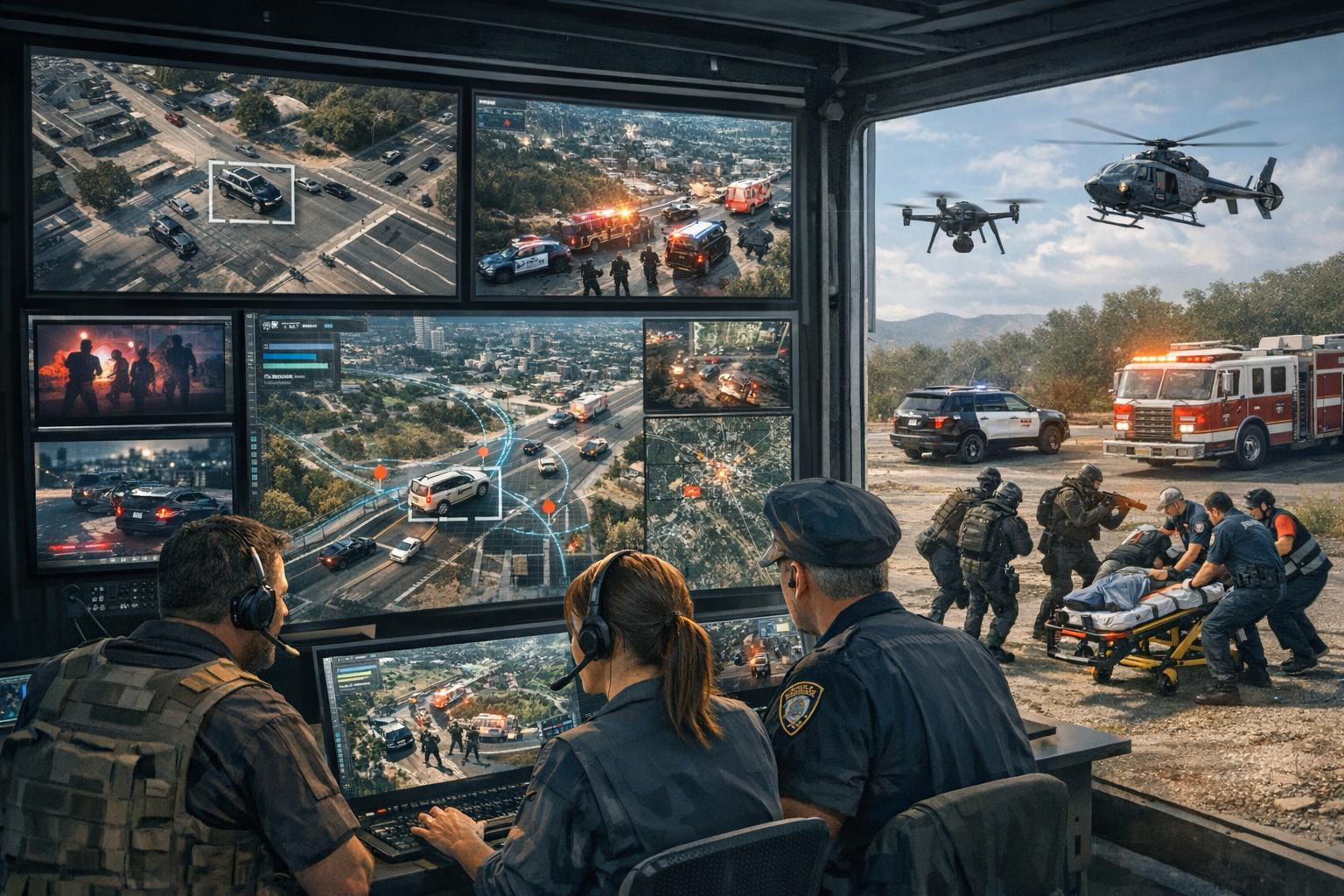
<Web-based incident simulation creates a secure and controlled virtual environment where rescue, police and ambulance personnel can practice complex situations under conditions appropriate to their real work. Each training session is structured around realistic scenarios that allow focus on tactical decision-making, team-building and operational coordination without real risk.
Who benefits from this?
Integrated tool is designed for rescue teams, police authorities, ambulance staff, as well as crisis management trainers and emergency preparedness authorities. It is ideal for team preparation, role testing and repeating cases before actual operations.
Why choose an incident simulation for training sessions?
Training sessions allow repetition and targeted training: each team exercise focuses on specific objectives - communication, leadership, safety procedures or logistical planning. Regular training increases the level of preparedness and helps to make decisions fast and confident in stress situations.
Key functions and advantages
- Adaptable scenarios: create and regulate incidents according to the requirements of real work and regional specificities.
- Interactive team training: role-sharing, communication channels and monitoring of tasks reflecting operational reality.
- Real time telemetry and analysis: performance monitoring, key metrics and detailed debrief, which support learning direction. Secure virtual environment: risk-free learning in complex and life-threatening scenarios. < Regular incident simulation reduces errors in real work, shortens response times and increases the confidence of the entire team in its capabilities. Analytics can identify weaknesses, correct procedures, and design targeted training plans.
What distinguishes and makes effective?
The administrative combination of a realistic simulation engine, a user-friendly control panel and deep learning analyses ensures fast learning transitions and clear performance meters. Integration with management systems and modular structure make it possible to create specific training sessions for both urban, road or high-risk units.
How to start?
Planning starts with target setting: select focus areas and assign participants. Thereafter, customised training sessions will be launched, followed by a structured debrief with data-based feedback. Through consistent training programmes, knowledge becomes a permanent skill and operational readiness becomes stronger.
Conversion guiding profession
If the aim is to increase response skills and contribute to more effective cooperation in complex situations, it is possible to book a free demo or initial study session. The test period provides a clear overview of how the incident accelerates the learning process, reduces costs and increases team readiness.

Comments (0)