



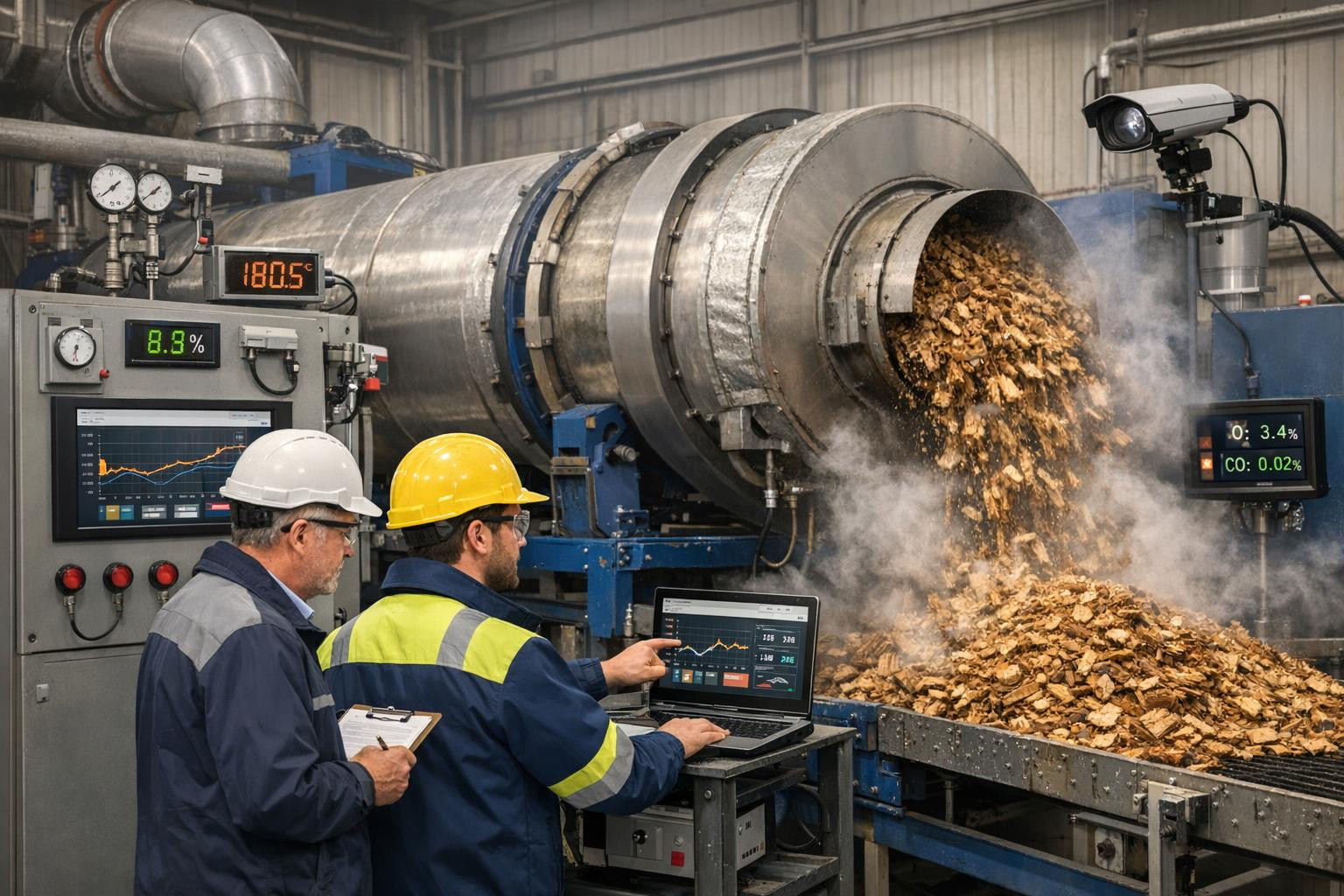
Uniform product quality: inspection of particle size, dust and foreign matter of chopped wood

Precision, reliability and compliance ensure stable production and lower costs - a solution that focuses on particle size distribution and dust control, detection of foreign matter and contaminants and standardised workflows. The system provides an operational overview of quality, reduces returns and simplifies compliance with regulations.
Who benefits from this?
- Wood masses and pellet manufacturers who need a homogeneous composition and burn quality
- Fuel stations and industrial users who require specified particle and dust characteristics
- Quality management and product development teams who need accurate analysis and traceability
- Laborators and Certifiers who assess standardised protocols and documentation
- Sampling and analysis of particle size distribution and dust control - accurate metering and real-time data ensure that the distribution of the particle size of the production meets the technical requirements.
- Sorting and classification criteria standardisation - a combination of sensor, optical and laboratory analysis capabilities reduces risks and ensures purity. l >l > Sampling and analysis protocols - Accreduced and repeated protocols provide reliable results and facilitate comparison of production conditions.l > Sorting>Sorting and classification criteria standardization < Adjustable tolerances, real-time monitoring and standardised protocols distinguish a new approach from normal inspection, allowing for rapid decision-making and clearly documented compliance.
- Sampling phase: standard sampling and analysis protocols are implemented to ensure representative and comparable samples.
- Li>Analysis: combining rapid and laboratory analyses to assess particle size distribution and dust concentration.
- Li>Identification and classification: detection and sorting of foreign matter and contaminants according to standard criteria.
- Repair and optimisation: automatic warnings and improvement recommendations to regulate the production process. Li>Areportability and auditing: detailed documentation facilitates audits and verification of compliance..
Why is this important?
Optimised particle size and dust reduction improve combustion efficiency, reduce equipment consumption and improve the quality of the final product. Early detection of foreign matter and contaminants protects production from damage to residues and assets and reduces production stoppages. The standardised approach increases customer confidence and facilitates auditing.



Comments (0)